A Matchday Memory Walk Around a Familiar Ground
A matchday memory walk helps you notice familiar entrances, meeting places and signs of use, turning a return to the ground into a richer local story.
A matchday memory walk around a familiar ground works best when you follow the routes people actually used, not a checklist of everything the venue contains. Start at an entrance you remember, pause where people gathered, then look for ordinary traces of use: a worn path, a noticeboard, a gate that now stays shut. These details can bring back the social life of a sporting place without asking you to cover every stand or retell every result.
The walk is not an inspection, and it need not depend on getting inside. A ground’s edges often hold the clearest clues to how people arrived, waited, met and left. If a place has changed, the gaps matter too: a missing turnstile or a new fence can sharpen your sense of what the old route meant.
Why does the familiar route feel harder to remember?
Memory often preserves a sequence of actions rather than a map. You may remember the person you met by the corner shop, the crush near a gate or the sound of a crowd beyond a wall, but not which side of the ground you approached. Trying to draw a complete plan can make those memories feel less certain than they are.
Begin with one reliable anchor: a bus stop, a bridge, a distinctive corner or the approach from a station. Then ask what came next. Did people cross the road together? Did a group stop for a snack? Was there a point where your route split from a friend’s? Let the answer shape the walk instead of forcing the memory into a neat circuit.
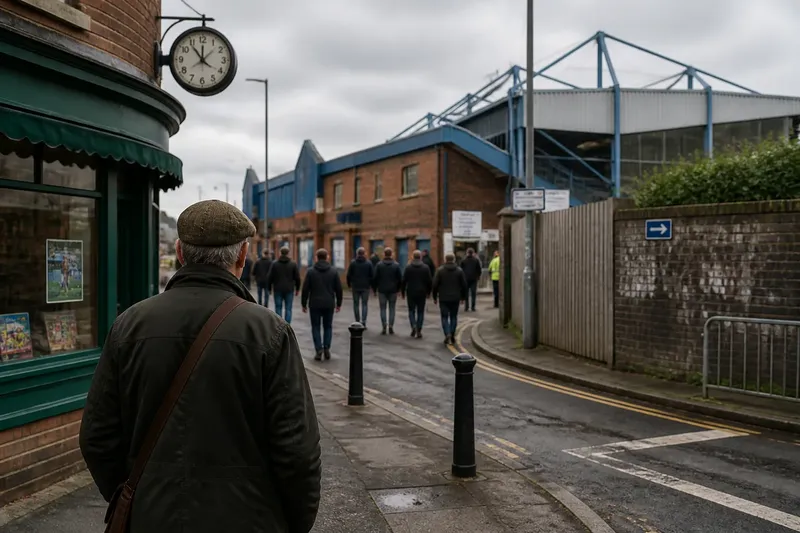
Say you remember meeting your uncle beneath a clock before a local football match, but cannot recall the entrance. Imagine walking from the clock towards the ground at an unhurried pace and noticing the old shopfronts, barriers and direction signs. You may recognise the route from the way people funnel towards one gate, even if the clock or entrance has changed. The useful result is a clearer account of the approach, not proof that every detail is exact.
What if the entrance has moved or disappeared?
Entrances are practical features, but they also organise a crowd’s habits. A gate can be relocated, blocked off or replaced by a turnstile line, leaving a gap between the ground you recall and the one in front of you. Avoid treating that mismatch as a failure of memory. Ask what the change tells you about how access is managed now.
Look from the public pavement for clues: an old opening in a boundary wall, a change in paving, a sign pointing towards a current entrance, or a path that continues behind newer fencing. Do not cross barriers or enter closed areas. If you are unsure where visitors may go, follow posted directions or ask venue staff.
Try describing both versions in your notes: “We used to come in beside the corner shop; today the public entrance is further along the road.” That simple contrast keeps remembered experience distinct from what you can see now. It also gives a future reader a useful landmark rather than a claim that the ground has stayed the same.
How can you find the old gathering point?
People often remember where they waited more vividly than where they sat. A meeting place might have been a bus shelter, a low wall, a café doorway or a patch of open pavement. It may never have been an official feature, which is why it can vanish without a plaque or sign.
Ask yourself what made the spot useful. Could everyone recognise it? Was it close enough to the entrance to regroup, but far enough from the queue to talk? Did someone sell programmes nearby, or did a familiar resident stand there? These questions turn a vague memory of “meeting outside” into a story about how a crowd coordinated itself.
If the exact point is gone, choose the nearest visible landmark and make the distance clear in your account. A changed shop, a rebuilt corner or a relocated shelter can still orient the story. The point is not to claim that the new landmark is the old one; it is to show where the remembered gathering sat in the surrounding neighbourhood.
What should you do when the ground looks completely different?
Change can make a familiar place feel oddly anonymous. New cladding, altered routes or a development beside the boundary may dominate your first impression. Rather than comparing the whole venue at once, narrow your attention to one edge: the pavement, the boundary wall or the approach from a nearby street.
Notice what has been retained and what now serves a different purpose. A wall might still mark the ground’s edge even if the old entrance has gone; a broad path may follow the line where people once queued. Keep observation separate from interpretation: write “the path bends beside the brick wall” before deciding that it follows an old matchday route.
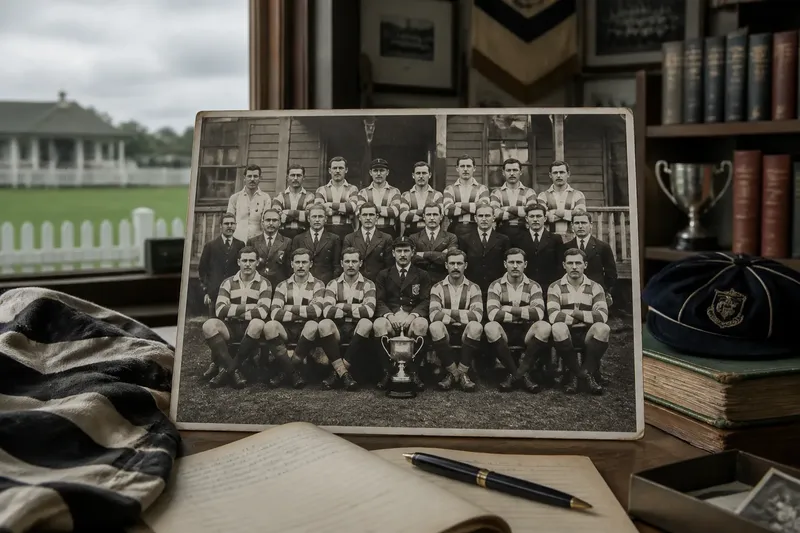
Where you have a family photograph, programme or ticket, use it as a prompt rather than a verdict. Compare visible landmarks, then record what remains uncertain. Older materials can leave out side streets or show a temporary arrangement, so the present walk and the remembered account each contribute different pieces.
Which matchday memory-walk questions help most?
Should I walk the route in the same direction as before?
Start in the direction you remember, because arrival and departure can feel like different journeys. If that route is closed or unsafe, stay on public paths and note where your original route would have diverged.
What if I cannot remember exact details?
Record the parts you do remember, such as a smell from a food stall, a wait beside a wall or the sound of the crowd. Mark uncertain details as uncertain instead of filling gaps with a plausible story.
Can I make the walk with someone else?
Yes, and differing memories can reveal how people experienced the same ground from different routes or meeting points. Let each person describe their own recollection before trying to combine the accounts.
What should I record during the walk?
Note the route, visible landmarks, places where people might pause and any change that alters access. A short written description or a sketch can be more useful than a large set of photographs without context.
How do you keep notes vivid without making them certain?
Use simple labels that separate what you saw from what you remember. For instance: “Seen today: a wide pavement beside the north gate. Remembered: people waiting near a kiosk. Unsure: whether the kiosk stood on this side of the road.” This small distinction makes your account easier to share and easier for another person to add to.
Photographs can help, but take them from places you are allowed to stand and avoid treating an image as a complete record. A picture of a gate may not show the queue that once formed there or the neighbour who waited for friends. Add a sentence about what the photograph cannot capture.
If you are walking with a relative or former supporter, ask open questions rather than supplying details for them. “Where did you meet?” leaves room for an answer; “Was it by the kiosk?” can accidentally steer the memory. One person may remember the journey, another the waiting, and another the moment the crowd moved through the entrance.
When should you stop the walk?
A memory walk does not need to circle the entire ground. Stop when the route has yielded a useful story, when a public path ends, or when the next section would turn the walk into a tour of features rather than a reflection on belonging. A single entrance and gathering point can carry more meaning than a complete circuit.
Before leaving, stand somewhere that lets you see the route you followed and name its sequence in a few plain sentences: where you began, where people gathered, and what has changed. That account gives the memory a shape another person can follow without pretending the ground is fixed or the past perfectly clear.
A matchday memory walk around a familiar ground becomes especially valuable when you leave room for someone else’s route. Share your notes with a former companion, family member or local supporter and invite them to add a different entrance, waiting place or way home. The ground’s story then grows through distinct recollections, rather than being reduced to one supposedly complete version.