The Tradition That Was Not Always There
Learn how to describe a sporting tradition fairly, trace its changes and decide whether it was adopted, adapted or recently remembered.

A sporting tradition can feel ancient because everyone at the ground knows what to do next. Yet a familiar song, procession or post-match custom may have begun within living memory, changed shape over time or been revived after a break. To understand a sporting tradition fairly, trace what people actually did and how they explain its meaning, rather than treating familiarity as proof of age.
This distinction matters when a club marks an anniversary, a supporter tells a story or a community decides whether to revive an old custom. The useful question is not simply, “Is it old?” It is: what kind of continuity does this practice have, and what evidence can people point to?
What should you call a sporting tradition?
Use “tradition” for a practice people repeat and recognise as meaningful, without implying that it has stayed unchanged. A tradition may be recent and still matter deeply. Calling it new does not make it insincere; calling it ancient without evidence can obscure the people who shaped it.
Keep three ideas separate:
- Age: when the practice began, as far as available accounts indicate.
- Continuity: whether it carried on, paused, or changed between its early appearance and today.
- Meaning: what participants say it expresses, such as welcome, loyalty, remembrance or local identity.
These strands need not match. A custom may be old but intermittent, or recent but already central to how a club marks a fixture. Describe each strand plainly instead of making one stand in for the others.
Which situation fits your custom?
Sort the account by the best-supported description. A practice can move between categories as more records or memories emerge, so treat these as useful labels rather than permanent verdicts.
Was it adopted from somewhere else?
Choose “adopted” when a club or group took up a practice associated with another place, sport or community. Look for accounts of who introduced it, what people borrowed and whether the custom had a particular meaning in its earlier setting.
Adoption does not mean mere copying. Supporters may take a tune, gesture or ritual and give it a local purpose. If the starting point is clear but the local meaning has developed since, describe both.
Did people reshape an existing practice?
Choose “adapted” when a custom continued in recognisable form but its wording, timing, participants or purpose changed. A chant might acquire new verses; a ceremony might shift from a team’s entrance to a wider community gathering.
Describe the alteration rather than presenting the current version as the original. If memories differ about when the change happened, say so; disagreement can reveal that people experienced the custom differently.
Was the custom introduced recently?
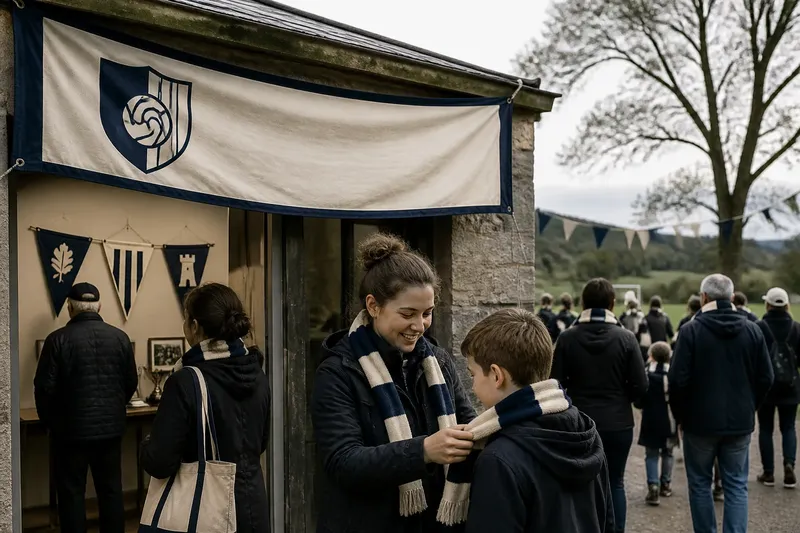
Choose “newly established” when accounts point to a fairly clear beginning and there is no persuasive evidence of an earlier version. A recent practice may become meaningful quickly, especially when participants choose it to welcome newcomers or mark a shared event.
Do not rush to call it “ancient” to make it sound important. Explain who began it, what it was meant to do and how people have made it their own.
Was it revived after a gap?
Choose “revived” when people deliberately brought back a practice that had stopped or faded from regular use. The revived version may draw on photographs, written records, memories or a mixture of them.
Say what was recovered and what was newly supplied. A community can honour an earlier custom without claiming that every detail survived intact.
What evidence can support the story?
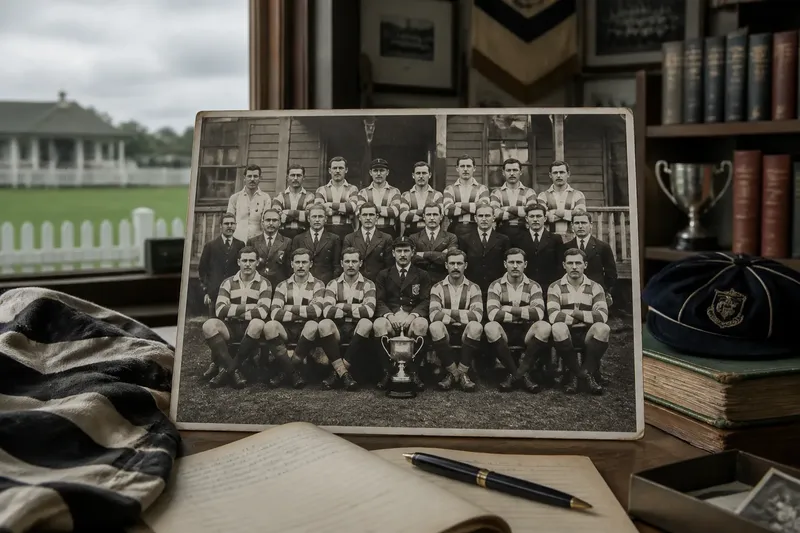
Begin with material that can be checked: club programmes, local newspaper reports, fixture notes, minutes, recordings, newsletters and photographs with clear context. A single early appearance establishes that something happened by then; it does not necessarily show when the custom began or whether it continued.
Ask people who took part, too. Invite them to describe what they remember, when they first encountered the practice and who taught it to them. Keep their account distinct from a documented date. One person’s memory can be valuable without serving as the sole record of a whole club’s experience.
Look for signs of interruption or change. A custom that appears in several records across different periods may have a stronger claim to continuity than one documented at a single celebration. Gaps do not prove a practice vanished: records may be incomplete, or the custom may have happened informally.
Say how certain the account is. “The earliest record we have seen” is more precise than “the first ever”, while “supporters recall” tells readers that the claim rests on memory. Where accounts conflict, name the disagreement instead of forcing a neat origin story.
How should you tell an origin story?
Build the story around what can be said plainly: the practice’s earliest known appearance, who seems to have taken part, any visible changes and the meanings participants attach to it now. Keep an uncertain origin open rather than filling the gap with a confident-sounding tale.
Imagine a club newsletter describes a pre-match call-and-response as a long-standing custom, while an older programme records it only at a special gathering and several supporters recall hearing it later as a regular feature. A careful account would say that the practice was documented at the special gathering, then became part of regular matchday routine at an uncertain point. That wording preserves the evidence and leaves room for memories that do not line up perfectly.
When writing for a display, programme or oral-history collection, distinguish quotation from interpretation. A participant may call a custom “the way we have always done it”; that phrase conveys belonging, but it does not establish a date. Both details can sit together if the account makes clear which is personal meaning and which is historical evidence.
What should you do if you want to revive one?
First, find out whether the practice is remembered by people who experienced it and whether any account records how it worked. Ask what participants valued, who was included and whether the old form had aspects that no longer fit the community. A revival is a present-day choice, not a duty to reproduce every remembered detail.
If the evidence is thin, be candid. You might describe the activity as inspired by an earlier custom, or as a new version based on several memories. Invite people connected to the club to discuss the wording, timing and invitation before presenting it as shared heritage.
Say you are considering a call-and-response remembered by a few former players but absent from the club’s surviving programmes. You could invite those players to describe it, ask current supporters whether they want to take part, and introduce it as a new gathering inspired by those memories. The observable result to look for is whether participants understand its connection to the past and choose to continue it, not whether it instantly feels old.
How can you describe the custom accurately?
Use a concise account that separates evidence from interpretation. These distinctions help readers understand what is known without draining the practice of its human meaning:
- Documented beginning: use when a reliable record identifies an early appearance, while avoiding claims that it was the first.
- Adopted practice: use when people took up a custom from another setting and gave it a place locally.
- Adapted custom: use when a recognisable practice changed in form, timing or purpose.
- Revival: use when participants deliberately renewed a custom after a period of reduced or absent use.
- Recent tradition: use when the practice is established and meaningful, but its history is relatively recent or still being traced.
For a label or spoken introduction, one sentence can do the work: “Supporters began gathering for this call in the club’s recent history; its wording has changed, and people now use it to welcome the team.” If the start date is unknown, say so rather than implying certainty.
Why does the distinction matter?
Careful wording gives credit to the people who made a custom meaningful. An adopted practice has a source; an adapted one has a history of change; a revival involves present-day choices. Treating all three as timeless can hide those contributions, while dismissing a recent custom as “not real tradition” ignores the community that now carries it.
The best account lets age, continuity and meaning remain distinct. That makes room for new customs as well as old ones, and gives future supporters a clearer story to inherit: not just what happens at the ground, but how people chose to make it matter.